Pink Phoenix is Your Team

A Dragon Boat Team of Fierce Survivor Women

Your River

Pink Phoenix gets the best views on the Willamette .

Remembrance

We are all in each others hearts

Heart in Florence

Oh the places we have been.

2022 IBCPC Regatta New Zealand

Oh the places we will go.

Sunday, June 21, 2020

Week Ten - Summer in the City

Summertime is always the best of what might be .... Charles Bowden


Fundraising

by Coach Anita

Some common refrains I hear from people about direct fundraising efforts - asking people to contribute money to a cause - is they don’t know enough people; the people they know don’t have any money; they aren’t any good at fundraising; and it makes them uncomfortable. I’ve heard people say they’d rather do ANYTHING other than fundraise.

If you fall into this camp, I want to encourage you to see Komen’s More Than Pink Walk fundraiser as a GROWTH opportunity. Taking steps to do something that you know is inherently good but makes you uncomfortable (i.e. taking risks) helps you:

  • Develop confidence - which benefits areas of your life outside of the activity. 
  • Overcome the fear of, as well as redefine the definition of, failure - you learn the worst thing that will happen isn’t really anything at all (and how bad is that?).
  • Discover unforeseen opportunities - the opportunities available for additional support (e.g. company matches, long-term sponsor) rarely come out of the blue, but when asked, people enjoy the opportunity to support.
  • Fosters creativity - learning how to structure an ask so that you’re comfortable with it can lead to incredibly creative endeavors.

I will not say I enjoy raising money, but it’s something I have confidence doing. Here are a few things I find effective when soliciting support.

I explain my relationship to the subject. 

I have had the great privilege of being on the coaching staff of Pink Phoenix, the first all-breast cancer dragon boat team in the US, for the past 13 years.

I answer the “why I am asking” question and give an overview of what the fundraising will do.

We haven’t been able to race this season, and the need for community resources and investment in research have not diminished in this time of COVID-19. So the team has committed to supporting the Susan G. Komen Foundation’s fundraiser, More Than Pink Walk. Their goal is to reduce breast cancer deaths by 50% by 2026.  We want to help them reach that goal.

I state my fundraising goal and ask them to contribute.

I set a goal of raising $250. I am very grateful if you are able to make a donation to support my effort. Every contribution amount helps.

You are not asking someone to pay your cell phone bill or buy your groceries - you are asking them to support an organization that you support. People are going to contribute because they want to support you. They’ve probably seen ads in newspapers or billboards, but they are going to donate to you because YOU asked them.

Realize that not everyone you ask will give, so you need to cast a wide net. I sent my Facebook “invitation to donate” to 219 people. 19 people initially contributed. Then I made another post and, at the time of this writing, an additional 2 people contributed. That’s a 10% response rate. 

Don’t expect someone in particular to donate, but enjoy the surprise of who does donate. I am ALWAYS surprised and delighted by who contributes to my fundraisers! And if I didn’t ask them, they wouldn’t have donated.

A couple of other thoughts.

  • By starting with a modest goal, you can always adjust up. I started with a $250 goal. With one ask I raised more than $750, so I decided to put in a little more effort and stretch the goal to $1,000. But maybe a challenge is what gets you going, so starting big keeps your fire lit. Do whatever is comfortable for you. 
  • In fundraising the word “small” is not positive. Keep language neutral to positive. Every contribution amount helps.
  • Fundraisers can involve your talents in exchange for a contribution. As a thank you for your contribution, I will send you one of my personalized Chinese calligraphy notecards. 
  • Utilize Instant Messenger. This enables you to personalize your ask to your Facebook connections and include a donation link. The one-on-one ask is very effective.
  • Write an email. If you or your circle of friends, family and acquaintances are not active on Facebook, write an email and include a link for them to make an online donation. 
  • Thank people as soon as possible and make it genuine. If you’re using Facebook, you can thank them on their wall or your page, as well as on a post to your Susan G. Komen fundraising page.

Remember that no one is going to think less of you for asking. Ask yourself, what’s the worst thing that could happen by asking? The answer is, Absolutely nothing. They don’t contribute, so you’re in the same situation as if you didn’t ask. But what CAN happen if you ask? A whole lot of good.

Week 10 - Looks Like Week 7 -  Pinks Stay Strong Workout With Coach Oden 


Coach Oden’s Corner:

So, anybody that knows me, knows that I lift weights. I’m comfortable moving things around and throwing them down… that’s my world. In the past three months I’ve reevaluated what my body needs and what equipment I have on hand.
What I have discovered, is that I have more things to work with at home than I realized. While virtually training with clients, I’ve found things to use that weren’t necessarily equipment before… milk jugs, cans, wine bottles… all the things. But it left me yearning for heavy equipment. In turn, I became a little stressed. So, what did my body need to help it de-stress? If I wasn’t lifting weights, how was I going to make that happen?
With a little nudge I began to do yoga occasionally. Maybe a little stretching, meditation, walks. Moving at a slower pace. My occasional yoga has now turned into a 30-day challenge, which I just completed day 21 of. Don’t get me wrong… I miss my heavy weights. But I also know that there will be a time for that again. My body has truly appreciated the time that I’ve spent getting in touch with what it needs.
I guess what I’m trying to say is “don’t be afraid to try new things to let your body tell you what it needs”. We all are desperately missing the water, but it’s only for a season. We will be back. But in the meantime, let yourself incorporate new things. Try new things. Be open to new things. Who knows, my next job might be a yoga instructor, (haha).
With that, I’m leaving you with a workout to try today rather than filming another. Give it a shot, see if that’s what your body needs today. You can always repeat a past workout or find something anew.
Today’s Workout:

-         
Coach Oden


10 things you probably didn't know about the Dragon Boat Festival

There’s more to it than just dragon boat racing

From By Time Out Hong Kong Posted: Tuesday June 4 2019

The annual Dragon Boat Festival is upon us, which means that we’re gearing up our stomachs for a healthy amount of zhong (glutinous rice wrapped in bamboo leaves, a traditional holiday delicacy) and praying that the typhoon season will have mercy on the exciting dragon boat races and rowdy festivities. While many of us celebrate the holiday year after year, there are many little known details and stories about the festival and how it came to be. Here are 10 fun facts that might surprise you about the Dragon Boat Festival. By Mabel Lui and Kaitlyn Lai

Dragon Boat Festival lunar calendar

The date doesn’t actually change every year
While the Dragon Boat Festival falls on a different date every year on the Gregorian calendar, the holiday actually occurs on the fifth day of the fifth month every year on the Chinese Lunar New Year calendar. Due to numerous legends and the date’s concurrence with the annual flood period and midsummer, a time when insects and bacteria tend to spread quickly, people considered this day to be a time of misfortune and adopted several customs to ward off bad luck and pray for good fortune.

Tuen Ng Festival rice dumplings

The sticky rice dumpling didn’t originate with the Dragon Boat Festival
This might come as a shock to you but the true origin of the sticky rice dumpling did not derive from Qu Yuan’s death. The dumplings were originally called jiao shu (jiao = horn, shu = grains, polished rice). In the agricultural society of ancient China, rice placed in cattle horns were used as sacrifice. As time progressed, leaves shaped as horns later replaced the horns for economical reasons.

Kong population!


Qu Yuan is not the only person remembered on this day
Despite the popular legend of Qu Yuan, communities around China pay tribute to different people during the Dragon Boat Festival. In present Guizhou province and South China, the festival commemorates Wu Zixu, a loyal advisor to the king; Yan Hongwo in Yunnan province is celebrated among the Dai community during the same day.


The festival is listed in the Unesco Intangible Cultural Heritage of Humanity after a minor international incident

Prior to South Korea nominating the Gangneung Danoje Festival (the Korean equivalent to China’s Dragon Boat Festival) as an intangible cultural heritage property to Unesco's list, the Chinese Dragon Boat Festival was not formally under Unesco’s protection. South Korea’s move to nominate their own festival sparked an uproar amongst the Chinese, who argued that their intangible heritage was stolen by the Koreans. Eventually, China nominated the Dragon Boat Festival to be added to the Unesco list and managed to avoid any major international incident.

 Dragon Boat Festival sachetPeople wear a fragrant sachet to ward off evil
Traditionally, people have worn fragrant sachets to ward off evil on this unfortunate day. Filled with aromatic herbs, these colourful ornaments often feature intricate embroidery to welcome good fortune and a long and healthy life. Outside of the Dragon Boat Festival, these sachets are often used to attract better income.  So keep 'em handy all year round. 

Whats up with all the dragons ? Stanley Dragon Boat Championships - main image

In Chinese mythology, having control of the dragons gives you the power to control rivers and rainfall, one especially handy at the height of summer. Carving dragon heads onto the front of boats is a way to appease the river dragons and to prevent droughts while promising good rainfall for the rice harvest.


Some form of drinking is always involved

Sure the dragon boat races, especially the revelry that takes place in Stanley Main Beach, feature plenty of beer-drinking action. But alcohol consumption is very much a traditional custom that is practised during the holiday. When the festival rolls around, people break out the realgar wine, a Chinese cereal wine mixed with powdered realgar (an arsenic sulfide mineral). The concoction is believed to be an effective antidote against mosquitoes, poison, disease and evil spirits, so take this as an opportunity to drink up!


Dragon boat racing has taken over the world

The only sport celebrated with a public holiday in Hong Kong, dragon boat racing is now an internationally recognized sport. Today, it is practiced in more than 50 countries, with an estimated 50 million active dragon boat paddlers in the world – that’s more than five times the entire Hong Kong population!
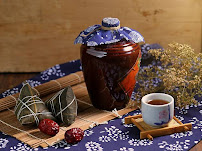


If you think you've tried every variation of the zhong, think again

There are more than 20 variations of sticky rice dumplings in China alone. While you would have to do some travelling to sample all of them, there are plenty of varieties to try in Hong Kong. You can go for ones with sweet fillings like red bean paste, date and melon, or dumplings with savoury fillings like salted egg, roast pork and dried shrimp. Some offer flavours with a modern twist like truffle sauce, crab meat and even sweet potato for those looking for a healthier alternative. There’s literally something for everyone’s taste buds

You can buy zhong in most dim sum restaurants

Zhong can be found at many dim sum restaurants in Hong Kong, but you can also sample them at local congee shops around town. If you’re looking to splurge a bit and try something different, InterContinental Hong Kong’s Yan Toh Heen offers an organic apple and black glutinous rice dumping ($218), while Chinese restaurant Tsui Hang Village offers two vegetarian options – dried morel mushroom and multigrain, as well as a golden kumquat zhong ($338).


Sunday, June 14, 2020

Week Nine - Mighty Fine

Week Nine - Mighty Fine 
I'm missing the Pickles this week.   So here is a little tribute to a great relationship. 


Motor Learning

by Coach Anita

Learning a skill is a fascinating process. It starts with thinking about how to perform a movement then moves to consciously performing a movement and culminates in unconsciously responding with the movement. This process is known as motor learning. 

Motor learning has three distinct stages as identified by human performance researchers Fitts and Posner. These three stages build on one another beginning with the cognitive stage, progressing to the associative stage, and culminating in the autonomous stage. The goal of training is to get to the point of responding rather than thinking. But to get to that point, which is the autonomous stage, everyone has to first move through the cognitive and associative stages. 


The cognitive stage is the initial stage where you learn what to do. Learning at this stage is primarily received visually and auditorily. Imagine trying to learn paddling without ever watching it done. The cognitive stage is where everything requires conscious effort - pushing the inside hip back, rotating open, hinging forward, entering with your body, applying top hand pressure and counter rotating, moving the inside hip backward while lifting paddle forward - therefore it can be cognitively taxing. The cognitive stage is characterized by having large gains in performance as well as inconsistent overall performance. 
In the associative stage movements are more efficient and some movements have become more automatic - such as pushing your hip back without thinking about it. With the largest gains having happened in the cognitive stage, the performance gains at this stage are smaller. This is where paddlers are stringing together the smaller things they’ve been working on. Very often at this stage, when one area is being focused upon for improvement, other areas show regression because these areas still require conscious effort. This is the stage where athletes spend most of their time, and even elite athletes return to this stage in the belief that there is always room for improvement or something new to learn.   

The autonomous stage requires years of training to get to. For elite athletes this is where performance becomes largely automatic and does not require much cognitive processing. When performance becomes automatic there is lower cognitive demand so thinking can be directed at secondary tasks. An example would be a professional quarterback whose attention can be on the defensive movements around him, adjusting calls at the scrimmage line, and detecting an imminent blitz rather than on the position of his wrist when he releases the ball. However, just as less cognitive demand allows for secondary focuses, it can also allow for distracting and irrelevant thoughts. Examples of an athlete losing focus can be seen in every area of sport. Very often this is a result of thoughts drifting toward the outcome before completing the process (e.g. an Olympic hopeful thinking about making the Olympic team instead of focusing on the last moments of the qualifying event).

While most of us will never fully enter the autonomous stage of our sport, over the course of many years, we can experience some of the characteristics of the stage including performance that feels smooth and automatic. Unfortunately, automatic movement can reinforce incorrect movement. The 10-year paddler who still bends her elbow in a choo-choo move to exit her blade is an example of an incorrect automatic movement. Everyone can and should go back to the cognitive and associative stages to be continually learning and striving for improvement. However, when we stop thinking about movements in these stages, it’s very easy to revert to old and incorrect movements that we re-entered these stages to try to change.

So whether you’re in your first year or two of paddling, or have been paddling since the 90s, there is always something to be working on. Being aware of the motor learning process can help you focus your energies and refine your technique.  


Building a Growth Mindset  by Coach Pat


Mindset, specifically growth mindset and it’s counterpart fixed mindset, are terms that keep coming up in this newsletter and in conversations with the coaches. The concept of mindset is not new. It was introduced by Carol Dweck of Stanford University over 30 years ago. Professor Dweck was studying the effect of failure on students. Professor Dweck gives us this definition of a growth mindset.  

“This growth mindset is based on the belief that your basic qualities are things you can cultivate through your efforts. Although people may differ in every which way in their initial talents and aptitudes, interests, or temperaments, everyone can change and grow through application and experience.” ~Carol Dweck

The opposite of a growth mindset is a fixed mindset.   Do you believe you have a certain set of skills and abilities that stay with you for life? Do you avoid effort and challenges because you don’t want to be embarrassed by failure? If so, then you are dealing with a fixed mindset. 

From Medium.com @lensbybenz

Don’t despair - we all have some of both mindsets and at different times one may be stronger than the other. Take this opportunity to talk back to your fixed mindset and work at allowing your growth mindset to prevail. How can you build your growth mindset about your training? Start with incorporating these things into your way of thinking.
  • Acknowledge and accept imperfections, yours and others.   
  • Face challenges bravely, look at each challenge as an opportunity which can lead to new adventure. 
  • Pay attention to your thoughts and your words. Replace your negative thoughts with positive, replace judgment with acceptance.  
  • Trust yourself. You are the only one you need to impress.
  • Accept criticism as a gift. Open up to hearing suggestions.
  • Value the process over the result. Fully engage and put effort into the process.  
  • “Not yet” is OK. When struggling with a task, remind yourself that you just haven’t mastered it “yet”.  
  • Own your attitude. Cultivate resilience along the way. 
Here is a quote from Michael Jordan that speaks to the power of a growth mindset:
“I’ve missed more than 9000 shots in my career. I’ve lost almost 300 games. 26 times, I’ve been trusted to take the game winning shot and missed...I’ve failed over and over and over again in my life. And that is why I succeed.” ~Michael Jordan

If you would like to listen to Dr. Dweck here is a short TED talk link.   Here she speaks to the power of “not yet”.  https://youtu.be/_X0mgOOSpLU

References: 
Dweck, C. S. (2008). Mindset: The new psychology of success. House Digital, Inc. Chicago
https://fs.blog/2015/03/carol-dweck-mindset/
https://medium.com/@lensbybenz_65973  How to Build (At Any Age) A Growth Mindset 


Protecting Your Skin

By Suzanne (Health and Fitness) 

It's important to protect our skin for UVA and UVB radiation. Exposure to ultraviolet radiation (UV) is the leading cause of skin cancer.  There are two types of UV radiation.
  • Ultraviolet A (UVS) which can pass through glass.  Research suggests that it may cause premature aging and wrinkling of the skin.  It also may play a role in causing basal cell carcinoma, squamous cell carcinoma and melanoma. 
  • Ultraviolet B *UVB) does not pass through car windows or other types of glass.  UVB radiation is more closely linked with the development of skin cancer and melanoma.  It also causes sunburn. 
Here are some tips that may help prevent skin cancer:

  • Use sunscreen every day even if it is cloudy.
  • Limit your exposure to the sun, especially from 10 am to 4 pm when the sun is typically the strongest. 
  • Pay attention to the UV index.  This numbered scale measures how damaging exposure to the sun will be on any particular day.  When the index is 1- or higher you should try to stay indoors.
  • Be careful around reflective surfaces.  Examples are water, snow and sand.  
  • Use a sunscreen with a sun protection factor (SPF) or 30 or higher if you plan to be outside longer than 20 minutes.  The sunscreen should be water resistant and protect against UVA and UVB rays.  Apply at least 1 ounce of sunscreen 15-30 minutes before going out doors. 
  • Reapply sunscreen every 2 hours and regularly after sweating or getting our of the water.  Do not use sunscreen that is outdated.
  • Use a lip balm or lipstick that contains sunscreen with an SPF of at least 30.
  • Wear protective clothing and sunglasses that protect your eyes from UVA and UVB rays. 
  • Don't burn.  Sunburns, especially in children have been linked to developing melanoma later in life.
  • Be aware of medications that make you more sensitive to the sun.  These include specific types of antibiotics, anti-inflammatory,  anti-fungals, blood pressure medication, and some types of chemotherapy. 
  • Avoid tanning beds! 
  • Avoid recreational sunbathing!
Be sure to check your skin for suspicious spots every month and it is recommended to have a mole check by a dermatologist annually.


This weeks Challenge : 
With Coach Oden 


Week 9 Workout 

with Coach Oden 


Sunday, June 7, 2020

Week Eight - Rose Festival Rain


Thank you to Vancouver Island Dragon Boat Teams for this photo.   Were you looking for the silver dragon cloud this weekend?  We are all missing Rose Festival right now, but we didn't miss getting drenched. Some of you are in counties that have opened up to Phase 1 and soon Phase 2.  Keep safe and stay well. 


Q&A session

by Coach Anita

I know this will surprise some of you, but I found myself at a loss for words. What more can I write about that you might find interesting or value-adding? Every week TeamFitness meets to discuss topic ideas, and this week I found myself drawing a blank. I’ve gotten a lot of questions over the years about little topics that don’t necessarily connect into a cohesive article, so I’m going to try a Q&A. Take this as an invitation that if you have a question or an idea for a topic, I’d love for you to add it to the comments section at the bottom of the post.

Question: What are the different roles of the sections of the boat?
The boat is divided into three main sections, and each section plays a special role. No one section is better than another, but there might be a better section for you as a paddler. Size, strength, and skill all play a role in how a boat is seated. To optimize boat run, we want to concentrate weight in the center, and have the weight balanced side to side. 

PACE. The first three benches are considered the front of the boat. Their job is pacing. The leads in the first bench work together to set the rate, and benches two and three provide support to set the pace for the rest of the boat to follow. The water at the front is undisturbed so there’s more resistance making it harder to move a paddle through the water. Paddlers in the front need to be able to break water and maintain excellent timing with a long steady stroke.

POWER. Benches 4-7 are considered the engine room. The water is moving by the time it gets to these larger, strong paddlers so it is easier for them to move their paddles through the water. To avoid rushing the fronts, these paddlers focus on getting a strong catch to maximize resistance on their blades so their power is moving the boat forward while maintaining the pace the front is setting.

PUNCH. The back of the boat is considered benches 8-10. The water is moving the fastest in this section of the boat making the water feel softer, and therefore harder to get resistance. Skilled paddlers who can get a good catch in fast moving water are seated here. The propulsion these paddlers generate from their catch earns this section the nickname “rockets.”


Question: What do you mean by coachable?

When a coach works with a paddler, the intent is always to help the athlete in some way. A coachable athlete is one who is open to feedback and incorporates it into performance. When a coach provides direction and a paddler doesn’t acknowledge it and/or does not demonstrate an attempt to incorporate the feedback into performance, that is an example of not being coachable. If the same direction is provided repeatedly without a sustained behavior change, that is an example of not incorporating feedback. It is important to remember that the intent of feedback is to help you, not to be critical of you. A coachable athlete has a growth mindset and believes the journey of learning and improvement never ends.


Question: Why do you only talk to the leads and caller after a race?

I appreciated this question because it came from someone whose perspective is from the back of the boat. As a coach outside the boat, I seek out the caller and leads to hear how the race felt. The caller has the perspective of seeing the entire boat, and the leads have the perspective of having set and made adjustments to the pace. A caller can share that she saw the middle or back of the boat struggling to keep up with the pace, which indicates the rate needs to be adjusted down. The leads might share that the caller’s timing was off from their stroke so it felt jerky behind them. Both may observe that there wasn’t enough initial power in the first three strokes so that boat didn’t lift enough to be able to accelerate quickly. With input from both perspectives, adjustments are made for the next race or the positive results are emphasized to the entire crew. It is not that other input and perspectives are not sought. It’s just that those conversations aren’t as easily viewed as the ones immediately following the exit of the boat.


Please share your questions in the comments section. I'd love to hear them.


Foam Rolling 102

by Coach Pat and Coach Oden


Foam rolling is not just for the avid exerciser.  This type of self massage allows you to relieve tightness and trigger points.   Think of how you feel when you have sat for hours at a desk or in the car.  Foam rolling can be extremely helpful to those who are still for too long. 

You can do foam rolling at any time.  Using it as part of a warm up before exercise has benefits as well as using it after exercise ,  but really any time is a good time.  Foam rolling before bed can help you relax and  sleep better.  Warm up specifically the areas you are going to roll before starting, don't hit the foam roller cold. 


Foam rolling isn't always comfortable but you shouldn't push when it is painful.  Make sure to control the amount of pressure when you find a particularly sensitive spot.  Back off on the pressure  by reducing the weight on the roller or move to just the edge of the painful area.   Increase the length of the roll as the muscle softens and the pain reduces, go slowly.   Focus on small areas rather than using large repetitive movements.   Stay on a spot for a couple of breaths and then move a couple of inches.  
Avoid rolling joints,  remember you are targeting muscles. 

This week Coach Oden has created a lower body foam rolling video.


Healthy Salads


By Suzanne
This is the time of year I start thinking of salads.  With many of the local fruits and veggies coming into season it’s fun to try some new flavors and textures. Here are a couple of recipes for you to try.

The first a chickpea salad from The Food Network.

2-15 ounce cans of chickpeas, drained and rinsed
1 small red onion chopped
1 small red bell pepper, finely chopped
A few ribs of celery and leafy tops, chopped
1 clove of garlic, minced and ground into paste with salt
1/2 teaspoon crushed red pepper flakes
2 tablespoons rosemary, finely chopped
Dressing:
2 tablespoons red wine vinegar
3 tablespoons extra virgin olive oil
Salt and ground black pepper

Combine chickpeas, onions, peppers, celery, garlic, red pepper flakes and rosemary in a medium bowl. Dress salad with vinegar, oil, salt and pepper.

The second is a salad that I have in my recipe book and not sure where I found it. 

Spinach, Strawberry and Chicken Salad
2 cups cooked chicken chopped
4 cups spinach
1 1/2 cups sliced strawberries
1 cup blueberries
1/4 cup chopped red onion
1/4 cup goat cheese crumbled
1/4 cup sliced almonds
In large bowl toss the chicken, romaine, strawberries, blueberries, red onion, goat cheese and almonds. Toss with dressing.
Dressing:
1/4 cup balsamic vinegar
1 cup strawberries
1/4 cup olive oil
1 clove minced garlic
1 tablespoon Dijon mustard
Salt and pepper
In a food processor or blender, pulse all ingredients until smooth.

ENJOY!


Week Eight Workout

with Coach Oden 


Monday, June 1, 2020

Week 7 - Moving to June


Moving into June, this is the seventh issue of the Pinks Stay Strong newsletter brought to you by TeamFitness.   Each newsletter post allows you to link back to prior weeks.  It's easy to miss a weekly read, but just as easy to find it again.  Remember to comment or ask your questions on this blog and one of us or all of us will address the subject.  


Snacking

By Coach Anita

Snacks. The word makes me think of a kindergarten teacher rounding up her charges for apple slices and animal cookies. Ah, Ms. Freeman at View Acres Elementary circa 1976. Today there are many more options in the snack aisle, and a lot more to think about when making choices. 


I look at snacks in one of two lights. If I am working out and on the water training a lot, snacks are a caloric support for what I’m doing next to ensure I have enough juice in the tank. On days when I’m less active, snacks tend to happen because of boredom and from more perceived than actual hunger. So let’s take a look at snacks according to the situation.

Once upon a time I owned a coffee shop and left for work at 4:30a. I was on my feet and moving from the moment I arrived at the shop for about 4 hours, then I took a 20 minute break, resumed my pace for another 3-4 hours, and then ran errands. I would arrive home around 1 or 2p, walk the dogs, workout or do chores, and start dinner. I wrapped everything up by 5p, and headed out the door to practice (my own or to coach) at 5:30p, and arrived home a little before 8p. I went to bed between 9-9:30p so I could get up at 3:30a the next morning. I regularly surpassed 25,000 steps a day. I ate breakfast at 4a, first lunch at 9a, second lunch at 1p, had a snack around 4p, and dinner at 8p. My schedule required the calories. Now that I’m not on my feet and working at the pace for that duration, my calorie needs are less but that doesn’t mean I’m not habitualized to eating frequently. I simply have to eat less calorie dense meals and snacks.

Snacks to keep you going should come from natural sources and need to have some calorie density to provide you with energy. Think proteins, fruits and vegetables, whole grains, dairy, and good fats. Examples: A rice cake layered with hummus, lunch meat and avocado. Dried banana or coconut chips with nuts and jerky slices. A leafy green salad with protein and dressing. A hard boiled egg and Babybel cheese round. A 5oz container of Greek yogurt with berries or jam. Nut butter stuffed medjool dates. 

When calorie density is not what you’re looking for, it’s just as important to look to the basic components of proteins, fruits and vegetables, whole grains, dairy and good fats. Heavily processed foods and snacks especially are formulated to make us want to eat more of the product. We all know the slippery slope of saying we’ll just have one potato chip, Dorito, or handful of M&Ms, and watching the bag empty. So rather than focusing solely on the number calories, consider the quality of the calories as well. You can eat all of the above snacks and make modifications. Quantity is one modification - half a cheese round; a small handful of dried fruit chips; half the amount of yogurt. Another tactic is modifying what is paired together. Medjool dates and nut butter together are delicious but calorie dense. Swap out the nut butter and enjoy the sweet dates by themselves (~100 calories for 2-3), or use the nut butter to make ants on a log with celery (~100 calories in 1TBSP of nut butter). Pop some cherry tomatoes (7 have about 15 calories), peel some Little Cuties (40 per orange) or grab some sugar snap peas (an entire Trader Joe’s bag is ~100 calories) when you know you’re snacking out of boredom. A large cucumber sliced in half with 1 TBSP of cream cheese, a slice of lunch meat or smoked salmon, sprinkled with lemon juice, salt and pepper is about 100 calories. Eating the whole cucumber, and doubling everything else still is only about 200 calories - and you feel like you’re eating something substantial. 

Prepping when you know snacking is in your future will help you make better choices. Nobody wants to cook when they are hungry - they want to eat. So be prepared. Many things you may have in your cupboards can make delicious snacks without a lot of effort such as roasted chickpeas, kale chips, low calorie energy balls, whole roasted sweet potatoes. Soup is one of my favorite things to eat and make. There are an endless number of low calorie soups that can be easily prepared so you have them waiting in your refrigerator. Eat a bowl with a side for a meal, but a cup makes a perfect snack.  

When your sugar tooth is in high gear indulge it with a little bit of dark chocolate. Dark chocolate is not only delicious, it’s nutritious. Trader Joe’s 72% Cacao Dark Chocolate bars are 1.65 ounces and come 3 bars to a pack. An entire bar has 280 calories. The bars are sectioned into 4 rows of 3 squares. One square has about 30 calories and provides a very satisfying amount of chocolate. It’s my daily go-to for my chocolate fix. 

Liquid calories do not provide the same satiation as chewing food, so if you’re trying to curb hunger skip the smoothie. Many types of drinks have what are described as empty calories because they do not have any nutritional value - soda pop, sports and energy drinks, and alcohol for example. But did you know that thirst is often mistaken for hunger? Clinical studies have shown that 37% of people mistake hunger for thirst. Make drinking simple liquids - water, plain tea, black coffee - a regular part of your day and you may find that you aren’t feeling the desire to snack as much.    


Week #7 Pinks Stay Strong Workout With Coach Oden 


Yes! Foam Rolling 

by Coach Pat and Coach Oden

Foam rolling is a good addition to your workout routine. Foam rolling is self-myofascial (myo = muscle) release technique. Used before and after exercise, foam rolling can increase range of motion, flexibility and reduce post workout muscle soreness.

"Fascia is a web of connective tissue formed in bands that wraps around all the internal parts of the body from head to toe and fuses it all together. It allows the muscles to move freely alongside other structures and reduces friction. It can be found immediately beneath the skin, around muscles, groups of muscles, bones, nerves, blood vessels, organs and cells. Fascia is everywhere. Biologically, it’s what holds us together. Like a snug pair of pantyhose (as if there is any other kind), fasciae are the bands that bind us."(www.deeprecovery.com/understanding-fascia)

Foam rolling action smooths and pulls the fascia to alleviate knots and trigger points. This action before a workout can increase range of motion temporarily which allows you to exercise more efficiently. Think about doing squats, if your quads are tight you won't be able to get down into the squat and engage your glutes. Rolling the quads before doing squats will help this tightness. As you continue to complete the exercise with the increased range of motion you strengthen the muscle allowing for increased range of motion. Post workout foam rolling can reduce muscle soreness and inflammation. Pre and post workout foam rolling warms the muscle and increases circulation. Foam rolling can be done without the workout as well, just be sure to warm the target areas up a little before starting.

Here are some tips and things to avoid as you start foam rolling :
  • Avoid rolling the lower back, keep within the area where the ribs support the roller
  • If you find lying on the roller is too painful you can start with the roller on the wall
  • Remember you are rolling muscles not joints.
You can purchase a foam roller for about $30.00. This would be a 36" or 30" roller. If you want to work on your shoulders and back you will need a roller long enough to lie on with your head and tail supported. Other areas would allow you to use a shorter roller.

This week Coach Oden has prepared a video on rolling shoulders and back.  Next week we will address rolling for the lower body.


Twitter Delicious Facebook Digg Stumbleupon Favorites More