Pink Phoenix is Your Team

A Dragon Boat Team of Fierce Survivor Women

Your River

Pink Phoenix gets the best views on the Willamette .

Remembrance

We are all in each others hearts

Heart in Florence

Oh the places we have been.

2022 IBCPC Regatta New Zealand

Oh the places we will go.

Monday, July 13, 2020

Week Thirteen - Finding Freedom

Having the power to determine your actions without constraint 


Freedom vs Lacking

By Coach Anita

A philosophy I’ve been learning about is that every topic is like a stick with two ends. On one end of the stick is a perspective of lack and on the other end a perspective of abundance. Keeping with the theme of this week’s post, I think you can interchange the word abundance with freedom. We often speak of freedom in relation to health, as in being free of something. I challenge the idea of freedom as being from something. When we speak of freedom from something it is viewing it in the concept of lacking - lacking disease, lacking restrictions, lacking obstacles. Instead I encourage the view of freedom as a full state in itself - freedom to do, to be, to have. What’s the difference? Consider the following statements: I am free of disease vs I am healthy. Which one feels better, more powerful? I am free of that place (e.g. work, school, prison) vs I am free to pursue my goals. By using what we don’t want in statements to define us - a lacking of something perspective - we continue to associate ourselves with the unwanted. Using statements of what we value and want is a freedom perspective - the ability to do, to be, to have.

Read the following statements and assess how each one feels to you. Then ask yourself whether it’s a lacking perspective or a freedom perspective.


  • I want a loving relationship vs I don’t want to be alone.
  • I don’t want to be sick vs I want to be well.
  • I want financial security vs I don’t want to be in debt.
  • I need to stop snacking vs I want to eat healthier.
  • I want to exercise regularly vs I hate how my body feels
  • I’m not as good a paddler as they are vs I am still developing.

Another way to look at this is to ask the question Why? to each lacking perspective. 


  • I don’t want to be sick. Why? (Because I want to be well.)
  • I need to stop snacking. Why? (Because I want to eat healthier.)
  • I’m not as good a paddler as they are. Why? (Because I am still developing.) 

Each Why? answer to a statement of lack can be expanded but they all lead back to a perspective of freedom. 


You can ask Why? to each freedom perspective statement but it doesn’t circle back to the lacking perspective. Instead, the answer further expands the perspective.


  • I want a loving relationship. Why? Because I enjoy the feeling of experiencing life with someone with whom I can have fun, who shares my interests, who supports me
  • I want financial security. Why? Because It will enable me to do more things I find fun and rewarding.
  • I want to exercise regularly. Why? Because I enjoy the feeling of developing strength and stamina. I enjoy being confident in my ability to move through my daily activities. Regular exercise assists me in meeting my paddling goals.


Applying freedom perspectives to our everyday experiences helps us to expand more into what we want rather than remain tied to the unwanted. Health research supports the effects of a positive attitude in healing. I encourage you to stay positive for your health, and use a freedom perspective for growth. 


The Freedom You Will Feel When You Stop Comparing Yourself to Others

By Suzanne Frank
Freedom means different things to different people. Consider that fitness and a healthy lifestyle also give you the freedom to do the things you like to do. This may be dragon boating, going on hikes, walking up stairs or even bending down to pick something up off the floor.
In previous blogs we have provided information about health and fitness. This week I want to discuss the freedom you will feel when you stop comparing yourself to others.
If you took the strength of others, and compared them to your weaknesses, how do you think you would compare? Do you think this would make you feel good? The answer is no way. The odd thing is, this is what most of us do at one time or another-and some of us do it pretty often.

Effects of comparing yourself to others may include feelings of unhappiness, resentment, dissatisfaction and doubting our own capabilities.

Being able to look at your strengths and see your true value is one of the keys to success. The reason is because without this ability you would be unmotivated and might not believe in yourself.

Here are some suggestions for freeing yourself from the habit of comparing yourself to others:

Awareness: we often make comparisons without even realizing we are doing it. We will have to practice being aware of comparisons and stop doing it.

Focus on your strengths: we sometimes focus on our weaknesses. Identify your strengths and focus on them.

Accept where you are: make decisions that will move you in the right direction.

Be okay with imperfection: No one is perfect. We all know that, but we seem to feel bad about ourselves when we don’t achieve perfection. It's that imperfection that makes you who you are.

Compare yourself with you:
You should be the only person you can compare yourself to. Are you building better habits and moving closer to your goals?

Focus on your journey: We are all on a journey to learn, improve, and be able to achieve our goals.

You are SPECIAL and not a replica of someone else.
Freedom is nothing but a chance to be better. (Albert Camus)
A friend is someone who gives you the freedom to be yourself. (Jim Morrison)


Freedom of Movement


By Coach Pat 

When I put the word “freedom” with “fitness”  I immediately thought  - freedom of movement.   Such a little phrase, but so important for those who have at times not been able to move their body without pain. This has been a personal journey.   If you have Arimidex side effects or arthritis you understand waking up and feeling 100 years old for the first 100  or 1000 steps.   It feels like there is no way to increase mobility and be pain free.   The best thing to do is to keep moving .   
The benefits of staying active are numerous. Exercise can help control joint pain and swelling.  Slow deterioration of arthritic joints and help you recover from a flare up.  Strengthening the muscles around the problem joints is key to reducing pain.   Exercise strengthens muscles, and stronger muscles can better support joints. Strong muscles greatly reduce the amount of stress placed on arthritic joints.  Strengthening exercises also help muscles develop shock-absorbing abilities to protect joints from further pain and injury.  Weight training and resistance band programs are common  ways to progress. As you work , you become stronger and the ability to move increases.
Take a look at your knees.  In fact, research suggests regular exercise can be as effective as acetaminophen or NSAIDs in reducing knee arthritis pain. By strengthening the quadriceps, hamstrings, and other muscles surrounding the knee, the knee becomes more stable and bones experience less impact during weight bearing, which in turn reduces pain. The joint cartilage needs motion and a certain amount of weight-bearing stress to stay healthy. Synovial fluid is stored in cartilage like water in a sponge. When the joint is used, the cartilage is squeezed and synovial fluid is released from the cartilage, delivering nutrients and lubrication to the rest of the joint.  
You may wonder how hard you need to work at this.   How much pain do you need to endure to move pain free.  Two or three, 20- to 30-minute, weight-training sessions each week are sufficient to start reaping noticeable benefits within four to 12 weeks, such as improved energy and muscle tone. Within six months, most people increase their strength 40 percent or more.  (Arthritis Foundation).
I have some videos for you.  
This is a great video about modification for arthritis when doing yoga .   https://youtu.be/pBSfTPesZVU

Hip stretches for arthritis : https://youtu.be/tQNk6mpFsww

https://youtu.be/_RN3AVn2ovM  Stretches for your knees. 
I like the Dr Jo videos because the reason for the exercise is explained.  And the progression is explained as well.  Some of these are probably too easy for you but it’s good to feel what is easy and take the next step.  


Coach Oden is on the move this week and will return next week. On Wednesday night we will do one of the previous workouts. Be there make a date with yourself. Workout Wednesday.


Monday, July 6, 2020

Week Twelve - Slow Down for the Holiday


This week we decided to take a breather.    We are working on something new for you to start next week.   


 .... Team Fitness 

Week Twelve - Slow Down for the Holiday


This week we decided to take a breather.    We are working on something new for you to start next week.   


 .... Team Fitness 

Monday, June 29, 2020

Week Eleven - Warming up for the 4th of July

June 25th marked the 5th day of the 5th month of the lunisolar calendar,  the day of theDragon Boat Festival.  Also called the  Duanwu Festival , in China this is one of four major annual festivals and warrants a three day holiday. 


Video Review

by Coach Anita

Video review is a fantastic tool for learning about a paddler’s strengths and their areas for growth. But, it’s not just beneficial for coaches when compiling rosters. If a paddler embraces what can be learned in video review, she can experience development in several areas.

How do you prepare for video review?


It can be nerve wracking for some people to think about having their performance displayed with a subsequent critique. The important thing to do is assess how you are feeling in anticipation of the review. Are you anxious, excited, terrified? If you’re anything other than excited to hear feedback, then ask yourself what’s causing the feeling? Is it the idea of comparison to other paddlers, and not feeling like you will measure up? This is a very common feeling. But you know what? If I asked a group of people who sat through a video review if they remembered anyone else’s review, the resounding response would be no. Their memory is of any critique that was offered, and once in a while they might remember that they received some praise (though most don’t remember this part).

Personal story - I attended a clinic put on by a national coach from Philadelphia that was hosted by Wasabi. The majority of the attendants were members of Wasabi, and I didn’t really know anyone. I was in my fourth year of paddling. When we got down to load the boats, all of the seats were taken except the front. I tried to explain I didn’t know the stroke that this club used, so I shouldn’t sit up there. No one seemed to care or, more importantly, move. The coach had us use a paddle that gathered data when each paddler used it, so the point wasn’t a type of stroke but how effective was the stroke. We did the water portion of the clinic and then gathered for video review. He showed how the information from the paddle was going to be graphed, what different numbers indicated, how the curve should look, etc. It seemed very technical. And then he looked down at his clipboard of the paddlers names and where they sat, and said he was going to be starting with me. I thought I was going to die! My stomach felt like a rock, and I just wanted to crawl under something. I didn’t want all of the attention from these people I had internalized as being better paddlers than me (Wasabi always beat the team I paddled on so I equated that as meaning all of them were better paddlers than me). My graph appeared on the screen and it definitely didn’t look like the ideal he had shown. He pointed out where I showed good power, where the power dropped in my stroke, and what to do to reduce that drop. Then he asked how long I’d been paddling and then said, “Keep at it, and you’re really going to be a good paddler.” I finally exhaled when it was done. But I still didn’t feel great because I expected the rest of the reviews of the graphs of the Wasabi paddlers would look much better than mine. Know what? They didn’t. The graphs were all over the board. Some had more to work on than others, but every one of us had something good pointed out and was given a critique with something to do to improve it. I don’t remember a single thing about anyone else’s review except for a paddler who disagreed with the coach’s assessment and walked out. That scene was the most memorable part of the clinic!

How do you embrace what is being said in video review?


Mindset is the key to having a good video review. You need to believe that the review is being conducted to help you improve. Conducting video reviews takes a lot of energy, so it’s not something your coaches take lightly. We want every one of you to have the benefit of seeing yourself, and know that anything we’re pointing out is to help you become a better paddler. A growth mindset is believing that you can always improve.

If you give someone a compliment followed by a critique, the compliment is often forgotten. So listen carefully to what is said. Take notes. Write down the strengths identified so you can internalize that strength. Write down the areas pointed out for further development, and what specifically you’re being told to DO to improve in those areas. For example, if you are pulling up with your lower arm to get your blade out of the water (choo-choo train), you’re likely going to be told you need to move your inside hip more while you pull up with your top arm. Focus on what you’re being told to do to help you address what was identified.

How do you use what you learned in video review?


Every practice plan has a focus but there is always time when you can be emphasizing work particular to you. Think about what you learned and allocate time to focusing on what you were told. Ask a coach to see if you are showing improvement in the area you’re focusing. Set a goal before getting on the boat to work on what you were told. For example, using the above choo-choo train situation, you could set a goal to be mindful of your inside hip movement connected to your top arm during the warm up. You could focus on the movement during speed drills. Do something to help you give focus to what you want to improve.

When you view feedback as opportunity, you’re taking a positive approach to a situation. When you view feedback as criticism, you’re assuming disapproval and judgment. Video reviews are conducted for the benefit of the paddler, so it's up to you to decide what your mindset is going to be. Learning to identify and internalize your strengths helps develop confidence, and it takes confidence to undertake improvement.


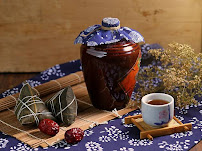
Zongzi - Traditional Food of Dragon Boat Festival

by Coach Pat
I am still celebrating the Dragon Boat Festival. This year it landed on June 25th. I love traditions, and I love food and cooking new things. This week it's Zongzi.

These excerpts are from the China Travel Guide.
"If you ask Chinese “What do you eat on the Dragon Boat Festival”, the answer must include Zongzi. Sticky rice dumplings are the traditional and Dragon Boat Festival Food. That's why the festival is also called the Zongzi Festival or Rice Dumplings Festival. Zongzi is mainly made of glutinous rice with various fillings, wrapped in bamboo or reed leaves and cooked for a few hours by steaming or boiling. Most commonly seen Zongzi are in tetrahedron, elongated cylinder or cone shapes.

It is said that Zongzi, with a history of more than 2,000 years, was invented in the Spring and Autumn Period (770 - 476 BC), which was used to worship the ancestors and divinities. However, what made the food popular till present days was the Zongzi story attached to the Dragon Boat Festival in the Warring States Period (475 - 221 BC) to commemorate the patriotic poet, Qu Yuan. After Quyuan drowned himself on a 5th day of the 5th lunar month, people would throw Zongzi into the river every year on that day to protect his body from fish’s bite. Later, Zongzi gradually turned to be the festival food. Nowadays, apart from the festival day, people can also eat this snack anytime."


The Dragon Boat Festival is certainly Chinese in origin and we also know it has Taiwanese roots because we paddle the big Taiwanese boats as well as the Hong Kong style boats. But this festival is important in Vietnam, Japan, Singapore and Korea as well. Each has regional Zongzi or equivalents. Chinese cultural influence is not restricted to what we know as China today. You might enjoy this article https://www.goldthread2.com/food/guide-zongzi-and-all-its-asian-cousins/article/2151510
I like savory, so I picked a savory recipe to share with you. You can make these rice dumplings sweet as well , using bean paste. Since making these is all in the packing and wrapping, I am linking to a video which I found really helpful. The filling is really 'of your choice'. Assembly is important just like wrapping a tamale or a dolma. Have fun and enjoy something new.  

Yes there are ways to make these in your insta-pot without all the soaking. But I am not the person to consult. Take a look here for some pointers : https://whattocooktoday.com/glutinous-rice-cones-zong-zi.html


Pinks Stay Strong Workout 

with Coach Oden 


Week Eleven - Warming up for the 4th of July

June 25th marked the 5th day of the 5th month of the lunisolar calendar,  the day of theDragon Boat Festival.  Also called the  Duanwu Festival , in China this is one of four major annual festivals and warrants a three day holiday. 


Video Review

by Coach Anita

Video review is a fantastic tool for learning about a paddler’s strengths and their areas for growth. But, it’s not just beneficial for coaches when compiling rosters. If a paddler embraces what can be learned in video review, she can experience development in several areas.

How do you prepare for video review?


It can be nerve wracking for some people to think about having their performance displayed with a subsequent critique. The important thing to do is assess how you are feeling in anticipation of the review. Are you anxious, excited, terrified? If you’re anything other than excited to hear feedback, then ask yourself what’s causing the feeling? Is it the idea of comparison to other paddlers, and not feeling like you will measure up? This is a very common feeling. But you know what? If I asked a group of people who sat through a video review if they remembered anyone else’s review, the resounding response would be no. Their memory is of any critique that was offered, and once in a while they might remember that they received some praise (though most don’t remember this part).

Personal story - I attended a clinic put on by a national coach from Philadelphia that was hosted by Wasabi. The majority of the attendants were members of Wasabi, and I didn’t really know anyone. I was in my fourth year of paddling. When we got down to load the boats, all of the seats were taken except the front. I tried to explain I didn’t know the stroke that this club used, so I shouldn’t sit up there. No one seemed to care or, more importantly, move. The coach had us use a paddle that gathered data when each paddler used it, so the point wasn’t a type of stroke but how effective was the stroke. We did the water portion of the clinic and then gathered for video review. He showed how the information from the paddle was going to be graphed, what different numbers indicated, how the curve should look, etc. It seemed very technical. And then he looked down at his clipboard of the paddlers names and where they sat, and said he was going to be starting with me. I thought I was going to die! My stomach felt like a rock, and I just wanted to crawl under something. I didn’t want all of the attention from these people I had internalized as being better paddlers than me (Wasabi always beat the team I paddled on so I equated that as meaning all of them were better paddlers than me). My graph appeared on the screen and it definitely didn’t look like the ideal he had shown. He pointed out where I showed good power, where the power dropped in my stroke, and what to do to reduce that drop. Then he asked how long I’d been paddling and then said, “Keep at it, and you’re really going to be a good paddler.” I finally exhaled when it was done. But I still didn’t feel great because I expected the rest of the reviews of the graphs of the Wasabi paddlers would look much better than mine. Know what? They didn’t. The graphs were all over the board. Some had more to work on than others, but every one of us had something good pointed out and was given a critique with something to do to improve it. I don’t remember a single thing about anyone else’s review except for a paddler who disagreed with the coach’s assessment and walked out. That scene was the most memorable part of the clinic!

How do you embrace what is being said in video review?


Mindset is the key to having a good video review. You need to believe that the review is being conducted to help you improve. Conducting video reviews takes a lot of energy, so it’s not something your coaches take lightly. We want every one of you to have the benefit of seeing yourself, and know that anything we’re pointing out is to help you become a better paddler. A growth mindset is believing that you can always improve.

If you give someone a compliment followed by a critique, the compliment is often forgotten. So listen carefully to what is said. Take notes. Write down the strengths identified so you can internalize that strength. Write down the areas pointed out for further development, and what specifically you’re being told to DO to improve in those areas. For example, if you are pulling up with your lower arm to get your blade out of the water (choo-choo train), you’re likely going to be told you need to move your inside hip more while you pull up with your top arm. Focus on what you’re being told to do to help you address what was identified.

How do you use what you learned in video review?


Every practice plan has a focus but there is always time when you can be emphasizing work particular to you. Think about what you learned and allocate time to focusing on what you were told. Ask a coach to see if you are showing improvement in the area you’re focusing. Set a goal before getting on the boat to work on what you were told. For example, using the above choo-choo train situation, you could set a goal to be mindful of your inside hip movement connected to your top arm during the warm up. You could focus on the movement during speed drills. Do something to help you give focus to what you want to improve.

When you view feedback as opportunity, you’re taking a positive approach to a situation. When you view feedback as criticism, you’re assuming disapproval and judgment. Video reviews are conducted for the benefit of the paddler, so it's up to you to decide what your mindset is going to be. Learning to identify and internalize your strengths helps develop confidence, and it takes confidence to undertake improvement.


Zongzi - Traditional Food of Dragon Boat Festival

by Coach Pat
I am still celebrating the Dragon Boat Festival. This year it landed on June 25th. I love traditions, and I love food and cooking new things. This week it's Zongzi.

These excerpts are from the China Travel Guide.
"If you ask Chinese “What do you eat on the Dragon Boat Festival”, the answer must include Zongzi. Sticky rice dumplings are the traditional and Dragon Boat Festival Food. That's why the festival is also called the Zongzi Festival or Rice Dumplings Festival. Zongzi is mainly made of glutinous rice with various fillings, wrapped in bamboo or reed leaves and cooked for a few hours by steaming or boiling. Most commonly seen Zongzi are in tetrahedron, elongated cylinder or cone shapes.

It is said that Zongzi, with a history of more than 2,000 years, was invented in the Spring and Autumn Period (770 - 476 BC), which was used to worship the ancestors and divinities. However, what made the food popular till present days was the Zongzi story attached to the Dragon Boat Festival in the Warring States Period (475 - 221 BC) to commemorate the patriotic poet, Qu Yuan. After Quyuan drowned himself on a 5th day of the 5th lunar month, people would throw Zongzi into the river every year on that day to protect his body from fish’s bite. Later, Zongzi gradually turned to be the festival food. Nowadays, apart from the festival day, people can also eat this snack anytime."


The Dragon Boat Festival is certainly Chinese in origin and we also know it has Taiwanese roots because we paddle the big Taiwanese boats as well as the Hong Kong style boats. But this festival is important in Vietnam, Japan, Singapore and Korea as well. Each has regional Zongzi or equivalents. Chinese cultural influence is not restricted to what we know as China today. You might enjoy this article https://www.goldthread2.com/food/guide-zongzi-and-all-its-asian-cousins/article/2151510
I like savory, so I picked a savory recipe to share with you. You can make these rice dumplings sweet as well , using bean paste. Since making these is all in the packing and wrapping, I am linking to a video which I found really helpful. The filling is really 'of your choice'. Assembly is important just like wrapping a tamale or a dolma. Have fun and enjoy something new.  

Yes there are ways to make these in your insta-pot without all the soaking. But I am not the person to consult. Take a look here for some pointers : https://whattocooktoday.com/glutinous-rice-cones-zong-zi.html


Pinks Stay Strong Workout 

with Coach Oden 


Sunday, June 21, 2020

Week Ten - Summer in the City

Summertime is always the best of what might be .... Charles Bowden


Fundraising

by Coach Anita

Some common refrains I hear from people about direct fundraising efforts - asking people to contribute money to a cause - is they don’t know enough people; the people they know don’t have any money; they aren’t any good at fundraising; and it makes them uncomfortable. I’ve heard people say they’d rather do ANYTHING other than fundraise.

If you fall into this camp, I want to encourage you to see Komen’s More Than Pink Walk fundraiser as a GROWTH opportunity. Taking steps to do something that you know is inherently good but makes you uncomfortable (i.e. taking risks) helps you:

  • Develop confidence - which benefits areas of your life outside of the activity. 
  • Overcome the fear of, as well as redefine the definition of, failure - you learn the worst thing that will happen isn’t really anything at all (and how bad is that?).
  • Discover unforeseen opportunities - the opportunities available for additional support (e.g. company matches, long-term sponsor) rarely come out of the blue, but when asked, people enjoy the opportunity to support.
  • Fosters creativity - learning how to structure an ask so that you’re comfortable with it can lead to incredibly creative endeavors.

I will not say I enjoy raising money, but it’s something I have confidence doing. Here are a few things I find effective when soliciting support.

I explain my relationship to the subject. 

I have had the great privilege of being on the coaching staff of Pink Phoenix, the first all-breast cancer dragon boat team in the US, for the past 13 years.

I answer the “why I am asking” question and give an overview of what the fundraising will do.

We haven’t been able to race this season, and the need for community resources and investment in research have not diminished in this time of COVID-19. So the team has committed to supporting the Susan G. Komen Foundation’s fundraiser, More Than Pink Walk. Their goal is to reduce breast cancer deaths by 50% by 2026.  We want to help them reach that goal.

I state my fundraising goal and ask them to contribute.

I set a goal of raising $250. I am very grateful if you are able to make a donation to support my effort. Every contribution amount helps.

You are not asking someone to pay your cell phone bill or buy your groceries - you are asking them to support an organization that you support. People are going to contribute because they want to support you. They’ve probably seen ads in newspapers or billboards, but they are going to donate to you because YOU asked them.

Realize that not everyone you ask will give, so you need to cast a wide net. I sent my Facebook “invitation to donate” to 219 people. 19 people initially contributed. Then I made another post and, at the time of this writing, an additional 2 people contributed. That’s a 10% response rate. 

Don’t expect someone in particular to donate, but enjoy the surprise of who does donate. I am ALWAYS surprised and delighted by who contributes to my fundraisers! And if I didn’t ask them, they wouldn’t have donated.

A couple of other thoughts.

  • By starting with a modest goal, you can always adjust up. I started with a $250 goal. With one ask I raised more than $750, so I decided to put in a little more effort and stretch the goal to $1,000. But maybe a challenge is what gets you going, so starting big keeps your fire lit. Do whatever is comfortable for you. 
  • In fundraising the word “small” is not positive. Keep language neutral to positive. Every contribution amount helps.
  • Fundraisers can involve your talents in exchange for a contribution. As a thank you for your contribution, I will send you one of my personalized Chinese calligraphy notecards. 
  • Utilize Instant Messenger. This enables you to personalize your ask to your Facebook connections and include a donation link. The one-on-one ask is very effective.
  • Write an email. If you or your circle of friends, family and acquaintances are not active on Facebook, write an email and include a link for them to make an online donation. 
  • Thank people as soon as possible and make it genuine. If you’re using Facebook, you can thank them on their wall or your page, as well as on a post to your Susan G. Komen fundraising page.

Remember that no one is going to think less of you for asking. Ask yourself, what’s the worst thing that could happen by asking? The answer is, Absolutely nothing. They don’t contribute, so you’re in the same situation as if you didn’t ask. But what CAN happen if you ask? A whole lot of good.

Week 10 - Looks Like Week 7 -  Pinks Stay Strong Workout With Coach Oden 


Coach Oden’s Corner:

So, anybody that knows me, knows that I lift weights. I’m comfortable moving things around and throwing them down… that’s my world. In the past three months I’ve reevaluated what my body needs and what equipment I have on hand.
What I have discovered, is that I have more things to work with at home than I realized. While virtually training with clients, I’ve found things to use that weren’t necessarily equipment before… milk jugs, cans, wine bottles… all the things. But it left me yearning for heavy equipment. In turn, I became a little stressed. So, what did my body need to help it de-stress? If I wasn’t lifting weights, how was I going to make that happen?
With a little nudge I began to do yoga occasionally. Maybe a little stretching, meditation, walks. Moving at a slower pace. My occasional yoga has now turned into a 30-day challenge, which I just completed day 21 of. Don’t get me wrong… I miss my heavy weights. But I also know that there will be a time for that again. My body has truly appreciated the time that I’ve spent getting in touch with what it needs.
I guess what I’m trying to say is “don’t be afraid to try new things to let your body tell you what it needs”. We all are desperately missing the water, but it’s only for a season. We will be back. But in the meantime, let yourself incorporate new things. Try new things. Be open to new things. Who knows, my next job might be a yoga instructor, (haha).
With that, I’m leaving you with a workout to try today rather than filming another. Give it a shot, see if that’s what your body needs today. You can always repeat a past workout or find something anew.
Today’s Workout:

-         
Coach Oden


10 things you probably didn't know about the Dragon Boat Festival

There’s more to it than just dragon boat racing

From By Time Out Hong Kong Posted: Tuesday June 4 2019

The annual Dragon Boat Festival is upon us, which means that we’re gearing up our stomachs for a healthy amount of zhong (glutinous rice wrapped in bamboo leaves, a traditional holiday delicacy) and praying that the typhoon season will have mercy on the exciting dragon boat races and rowdy festivities. While many of us celebrate the holiday year after year, there are many little known details and stories about the festival and how it came to be. Here are 10 fun facts that might surprise you about the Dragon Boat Festival. By Mabel Lui and Kaitlyn Lai

Dragon Boat Festival lunar calendar

The date doesn’t actually change every year
While the Dragon Boat Festival falls on a different date every year on the Gregorian calendar, the holiday actually occurs on the fifth day of the fifth month every year on the Chinese Lunar New Year calendar. Due to numerous legends and the date’s concurrence with the annual flood period and midsummer, a time when insects and bacteria tend to spread quickly, people considered this day to be a time of misfortune and adopted several customs to ward off bad luck and pray for good fortune.

Tuen Ng Festival rice dumplings

The sticky rice dumpling didn’t originate with the Dragon Boat Festival
This might come as a shock to you but the true origin of the sticky rice dumpling did not derive from Qu Yuan’s death. The dumplings were originally called jiao shu (jiao = horn, shu = grains, polished rice). In the agricultural society of ancient China, rice placed in cattle horns were used as sacrifice. As time progressed, leaves shaped as horns later replaced the horns for economical reasons.

Kong population!


Qu Yuan is not the only person remembered on this day
Despite the popular legend of Qu Yuan, communities around China pay tribute to different people during the Dragon Boat Festival. In present Guizhou province and South China, the festival commemorates Wu Zixu, a loyal advisor to the king; Yan Hongwo in Yunnan province is celebrated among the Dai community during the same day.


The festival is listed in the Unesco Intangible Cultural Heritage of Humanity after a minor international incident

Prior to South Korea nominating the Gangneung Danoje Festival (the Korean equivalent to China’s Dragon Boat Festival) as an intangible cultural heritage property to Unesco's list, the Chinese Dragon Boat Festival was not formally under Unesco’s protection. South Korea’s move to nominate their own festival sparked an uproar amongst the Chinese, who argued that their intangible heritage was stolen by the Koreans. Eventually, China nominated the Dragon Boat Festival to be added to the Unesco list and managed to avoid any major international incident.

 Dragon Boat Festival sachetPeople wear a fragrant sachet to ward off evil
Traditionally, people have worn fragrant sachets to ward off evil on this unfortunate day. Filled with aromatic herbs, these colourful ornaments often feature intricate embroidery to welcome good fortune and a long and healthy life. Outside of the Dragon Boat Festival, these sachets are often used to attract better income.  So keep 'em handy all year round. 

Whats up with all the dragons ? Stanley Dragon Boat Championships - main image

In Chinese mythology, having control of the dragons gives you the power to control rivers and rainfall, one especially handy at the height of summer. Carving dragon heads onto the front of boats is a way to appease the river dragons and to prevent droughts while promising good rainfall for the rice harvest.


Some form of drinking is always involved

Sure the dragon boat races, especially the revelry that takes place in Stanley Main Beach, feature plenty of beer-drinking action. But alcohol consumption is very much a traditional custom that is practised during the holiday. When the festival rolls around, people break out the realgar wine, a Chinese cereal wine mixed with powdered realgar (an arsenic sulfide mineral). The concoction is believed to be an effective antidote against mosquitoes, poison, disease and evil spirits, so take this as an opportunity to drink up!


Dragon boat racing has taken over the world

The only sport celebrated with a public holiday in Hong Kong, dragon boat racing is now an internationally recognized sport. Today, it is practiced in more than 50 countries, with an estimated 50 million active dragon boat paddlers in the world – that’s more than five times the entire Hong Kong population!


If you think you've tried every variation of the zhong, think again

There are more than 20 variations of sticky rice dumplings in China alone. While you would have to do some travelling to sample all of them, there are plenty of varieties to try in Hong Kong. You can go for ones with sweet fillings like red bean paste, date and melon, or dumplings with savoury fillings like salted egg, roast pork and dried shrimp. Some offer flavours with a modern twist like truffle sauce, crab meat and even sweet potato for those looking for a healthier alternative. There’s literally something for everyone’s taste buds

You can buy zhong in most dim sum restaurants

Zhong can be found at many dim sum restaurants in Hong Kong, but you can also sample them at local congee shops around town. If you’re looking to splurge a bit and try something different, InterContinental Hong Kong’s Yan Toh Heen offers an organic apple and black glutinous rice dumping ($218), while Chinese restaurant Tsui Hang Village offers two vegetarian options – dried morel mushroom and multigrain, as well as a golden kumquat zhong ($338).


Twitter Delicious Facebook Digg Stumbleupon Favorites More